
Who we are
About ESH
The European School of Haematology (ESH) is a not-for-profit institution, which mission is to develop, coordinate and implement programmes for the dissemination of information and lifelong learning in the form of live events and online trainings for specialists in all fields of haematology and related disciplines.
Our activities follow the pre-established standards of quality and review set by the ESH Executive and Scientific Committees, in collaboration with programme chairpersons and editors.
ESH organizes the following kinds of meetings:
- Scientific Workshops:
→organized in rapidly evolving scientific fields
- Translational Research Conferences:
→disease-specific
→focus on leading-edge basic, clinical and therapeutic research and future perspectives.
- “How to Diagnose and Treat” Conferences:
→disease-specific
→emphasize clinical management, including future perspectives
→use case-based lectures to stimulate interaction.
ESH also offers freely accessible training tools on its eLearning Centre such as slide bank, video presentations / webcast, and discussions; as well as quizzes, learning tools, interviews, abstracts, documents and articles.
Mission statement
ESH provides a diverse portfolio of leading-edge scientific, translational research and clinically oriented meetings at which expert international faculties actively inform, mentor and interact face to face with trainees and practicing biologists and clinicians from across the world.
Words of executives
As ESH President and Chair of the Scientific Committee, it is our pleasure to present you with the ESH conference upcoming programme.
ESH is convinced that the challenge facing haematologists today is no longer access to new data but rather access to critical discussion with experts so as to better identify, prioritize and process new information. This explains why ESH conferences bring international authorities in the field together to new, often unpublished data. Ample time and multiple opportunities for critical discussion and individual mentoring with experts are built into each ESH conference programme.
ESH Conferences present state-of-the-art science and insight into new developments in the fields of basic, clinical and therapeutic research in Haematology.
ESH conferences are directed to:
- the fully trained and those still in-training
- 200-500 participants, according to the meeting
The experience of the School clearly demonstrates how an institution for continuing medical education can promote communication among scientists at the pan-European and international levels, catalyze the creation of new trans-European basic and clinical research networks, and contribute to the education and integration of younger scientists in the active scientific community.
ESH Training Tools:
International experts in the field produce ESH tools for continuing education. They are available to scientists and clinicians free of charge and are used throughout the world.
CME accreditation:
ESH was one of the founding partners and providers of the pan-European system for the accreditation and quality control of continuing medical education in haematology. This system is based on peer review and on going quality control measures. ESH has worked for 30 years to improve and harmonize the quality of education in Haematology throughout Europe with the generous support of the world’s most prominent haematologists and haematology organizations. As President and Chair of the ESH Scientific Committee, we hope you will find the upcoming programme adapted to your needs in terms of continuous training, education and professional development. Your feedback is always welcome and will help the Scientific Committee to develop programmes adapted to your needs.
Hervé Dombret - ESH President
Michaël Hallek - Chair Scientific Committee
ESH and “Institut Universitaire d’Hématologie”
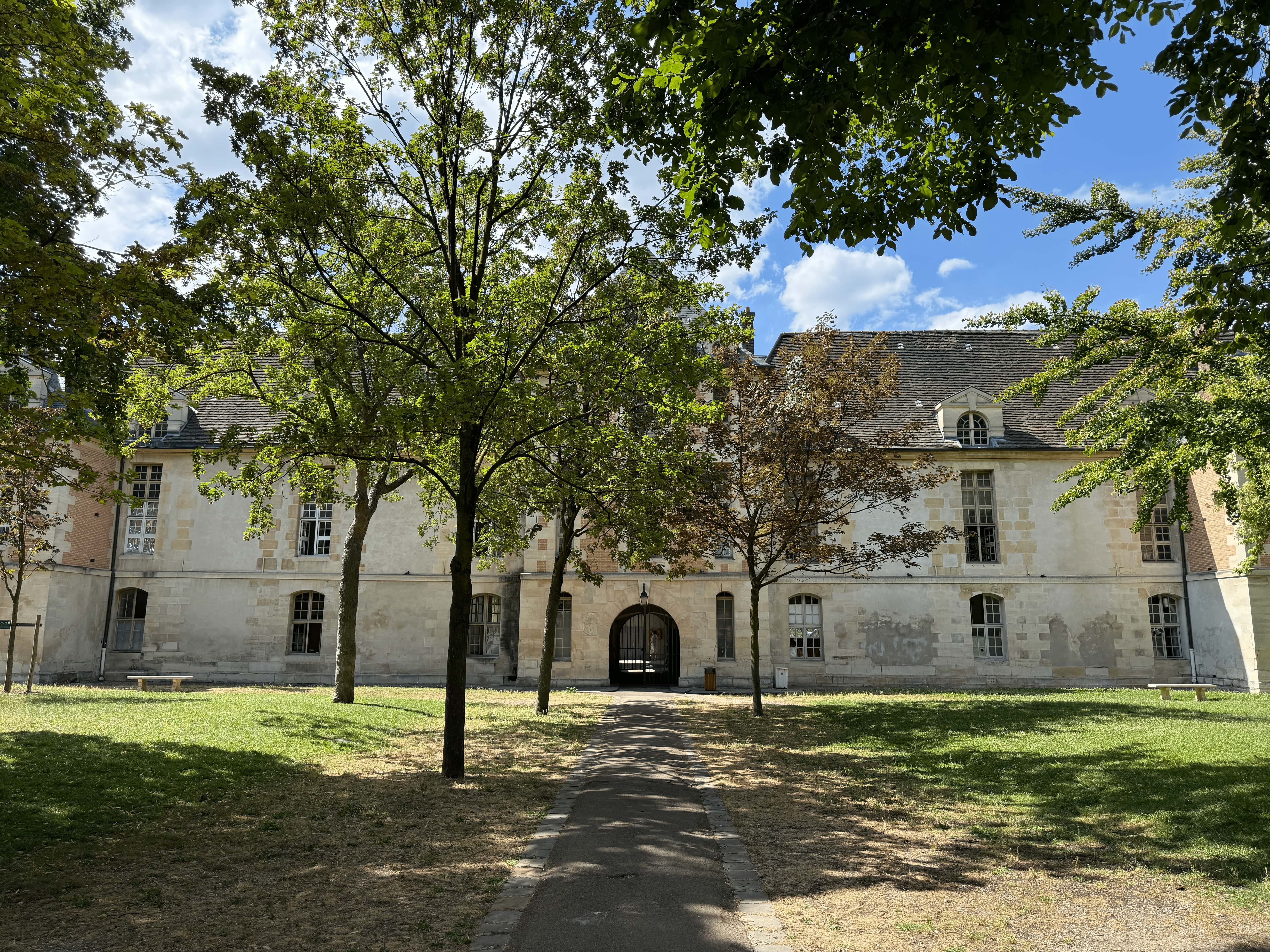
The European School of Haematology is located in the IUH (University Institute for Haematology) building of the Hôpital Saint-Louis in Paris. The IUH was created in 1958 by Professor Jean Bernard and Professor Jean Dausset. Its current Director is Professor Jean Soulier.
THREE KEY IDEAS THAT INSPIRE IUH ACTIVITIES:
– Focus research on leukaemias and blood related diseases
– Unify all research techniques around a common goal
– Facilitate dialogue and synergistic action between the scientists who work to improve our understanding of the mechanisms underpinning haematological disorders and the physicians who treat them.
Research on the haemopoietic system has led to major discoveries that have revolutionized the treatment of blood disorders including leukaemias and lymphomas, and have also served as models for other medical settings.